
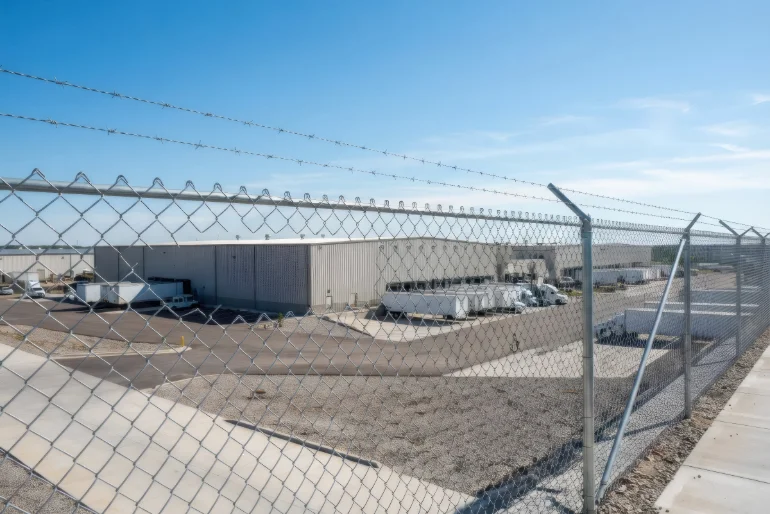
Modern perimeter security starts with detecting threats before they reach your facility.
Security Threats Often Start Outside the Gate
A security incident does not always begin at the entrance.
Unauthorized individuals, vehicles, or other potential threats may approach a facility long before they reach a gate, fence, or restricted area. By the time a threat reaches the access point, security teams may already have limited time to assess and respond.
This is why modern perimeter security focuses on early detection, verification, and response—creating visibility beyond the physical boundary of a facility.
Instead of relying only on fences, guards, and cameras at entry points, enterprises can combine multiple technologies to detect potential threats earlier and provide security teams with actionable information.
Why Traditional Fences and Guards Are Not Enough
Fences and security personnel remain important components of physical security, but they are primarily dependent on physical barriers and human observation.
Large facilities can have extensive boundaries, multiple approach routes, uneven terrain, and areas with limited visibility. Continuous monitoring across every section of a perimeter can be difficult.
Environmental conditions such as rain, dust, fog, glare, and changing light can also affect visibility.
More importantly, detecting an intruder only when they reach the gate or restricted zone can significantly reduce the time available for security teams to respond.
Modern perimeter security addresses this challenge by introducing detection and verification capabilities before a threat reaches the facility’s critical areas.
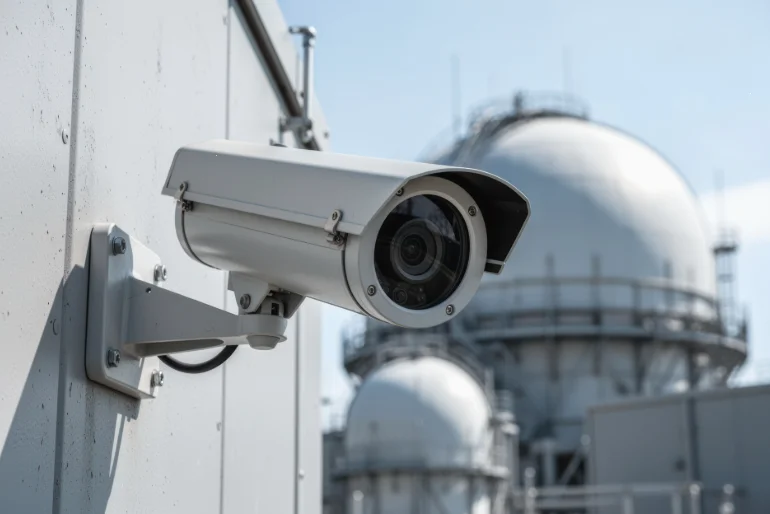
What Modern Perimeter Security Systems Look Like
A modern perimeter security strategy combines multiple detection, verification, deterrence, and response technologies across different zones. The goal is to identify potential threats early, verify events quickly, and enable an appropriate response.
Approach Monitoring
The approach zone covers areas outside the main perimeter where potential threats can first be detected.
Radar and long-range surveillance cameras can help identify movement across large open areas and provide security teams with earlier awareness.
Boundary Detection
The boundary zone focuses on detecting attempts to cross or breach the physical perimeter.
Technologies such as Perimeter Intrusion Detection Systems (PIDS), fence sensors, buried sensors, and beam-based detection can be deployed depending on the site and threat profile.
Verification and Response
Once an event is detected, security teams need sufficient information to assess and respond.
Visible and thermal cameras, video analytics, alarms, maps, and integrated security platforms can help operators verify events and initiate the appropriate response.
Deterrence
Lighting, strobes, audible alerts, and IP-based speakers can support deterrence and provide warnings when appropriate.
Layered security is not simply about adding more security devices. It means combining complementary technologies so detection, verification, deterrence, and response work together.
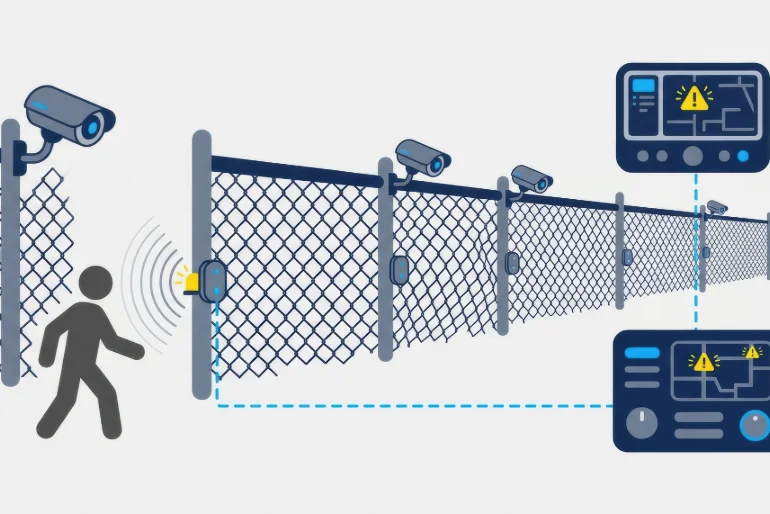
PIDS: Detecting Intrusion at the Boundary
Perimeter Intrusion Detection Systems (PIDS) are designed to detect attempts to breach or cross a defined perimeter.
Depending on the site and fencing configuration, PIDS solutions can include:
- Fence vibration sensors
- Fibre-optic fence detection
- Buried or surface-mounted detection cables
- Microwave or infrared beam systems
PIDS performance depends on appropriate technology selection, installation, calibration, and site conditions.
Factors such as vegetation, wind loading, traffic vibration, animals, and other environmental conditions can influence detection performance and potential false alarms.
For this reason, perimeter detection should be designed around the physical characteristics and operating conditions of the site rather than treated as a one-size-fits-all solution.
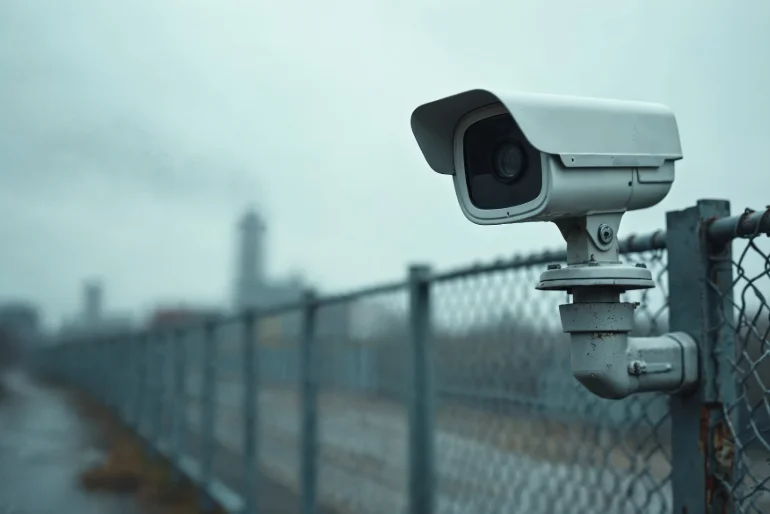
Radar: Detecting Movement Before Visual Confirmation
Radar can provide long-range detection and tracking of moving objects across large areas.
Unlike conventional cameras, radar does not depend on visible light to detect movement. This makes it useful for monitoring open spaces, approach roads, large boundaries, and other areas where long-range detection is required.
Radar can also work alongside cameras. When a potential target is detected, radar can provide location and tracking information that can be used to guide a PTZ camera toward the area for visual verification.
This combination can help security teams move from detection to verification more quickly.
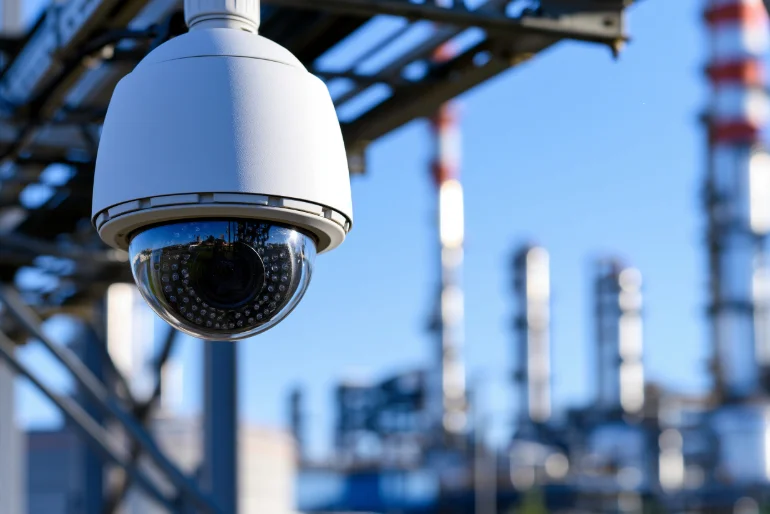
Thermal Cameras: Detection in Low-Visibility Conditions
Thermal cameras detect heat signatures rather than relying only on visible light.
They can be particularly useful for monitoring areas during darkness and in certain low-visibility conditions where conventional cameras may have reduced effectiveness.
Thermal surveillance can support:
- Detection across long perimeter sections
- Verification of potential intrusion events
- Monitoring of poorly lit areas
- Detection support in challenging visibility conditions
Thermal cameras are not a replacement for conventional CCTV. Instead, they can complement visible-spectrum cameras by providing an additional detection and verification layer.
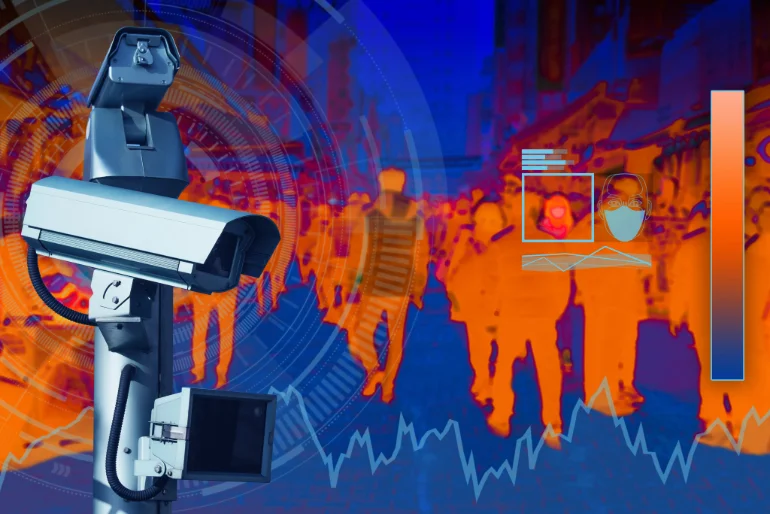
Video Analytics: Turning Detection into Intelligence
Video analytics adds intelligence to surveillance by automatically analysing camera feeds for defined events or behaviours.
Depending on the solution and deployment, analytics can support functions such as:
- Human and vehicle classification
- Intrusion detection
- Loitering detection
- Wrong-way movement detection
- Unusual stopping or movement patterns
Faster Verification
When a perimeter sensor generates an alarm, associated cameras and analytics can help operators determine whether the event represents a genuine security incident or a potential false alarm.
More Efficient Alarm Handling
Integrating detection technologies with video analytics allows security teams to prioritise events and focus their attention on incidents that require immediate investigation or response.
Integrating Perimeter Security with the Wider Security Ecosystem
Perimeter detection becomes more effective when it is connected to the wider security infrastructure.
Depending on the facility, perimeter systems can integrate with:
- Video Management Systems (VMS)
- Access control systems
- Visitor management systems
- Alarm and incident management platforms
- PSIM or integrated command dashboards
- Security operations centres
For example, a perimeter alarm can trigger the associated camera feed, identify the relevant location on a site map, and provide operators with information needed to assess the event.
This moves perimeter security from isolated alarms toward an integrated security response workflow.
Choosing the Right Perimeter Security Technology
Technology selection depends on the site’s geography, perimeter length, environmental conditions, threat profile, and operational requirements.
- Large open areas: Radar combined with long-range cameras can provide wide-area detection and tracking.
- Fence-line intrusion: PIDS can detect attempts to breach suitable perimeter fencing.
- Low-light environments: Thermal cameras can support detection and verification where visible cameras may have limited performance.
- Long-distance detection: Radar combined with thermal cameras can provide early detection and visual verification across large areas.
- Gates and restricted areas: Beam sensors combined with video surveillance can create defined detection and verification zones.
- High-risk facilities: A layered approach combining PIDS, radar, thermal cameras, and video analytics can provide multiple levels of detection and verification.
A professional site assessment is important before selecting the right technology. Perimeter length, terrain, detection range, environmental conditions, potential false-alarm sources, camera positioning, and response procedures should all be considered during system design.
Key Takeaways
Modern perimeter security is moving beyond the traditional concept of a fence, gate, and security guard.
Effective perimeter protection focuses on:
- Detecting threats as early as possible
- Combining multiple detection technologies
- Using video for faster event verification
- Applying analytics to improve situational awareness
- Integrating alarms with the wider security ecosystem
- Designing technology around site-specific risks and conditions
- Enabling security teams to respond with better information
Early detection can give security teams more time to assess, decide, and respond.
Frequently Asked Questions
What are modern perimeter security systems?
Modern perimeter security systems combine technologies such as PIDS, radar, thermal cameras, video surveillance, and video analytics to detect, verify, and respond to potential threats around a facility.
When should a facility use radar for perimeter security?
Radar is particularly useful for large open areas, long-distance detection, approach monitoring, and situations where security teams need to track movement before visual confirmation.
Do thermal cameras replace conventional CCTV?
No. Thermal cameras complement conventional CCTV by detecting heat signatures and supporting surveillance in darkness and certain low-visibility conditions.
How can false alarms be reduced in perimeter security?
False alarms can be reduced through appropriate technology selection, correct installation and calibration, environmental assessment, video verification, analytics, and combining multiple detection inputs where appropriate.
Can perimeter security integrate with access control and VMS?
Yes. Perimeter detection systems can be integrated with VMS, access control, alarm management, visitor management, and other security platforms to create coordinated detection and response workflows.
Ongoing maintenance is equally important to ensure perimeter detection systems continue to perform as designed.
Build a Stronger Perimeter Security Strategy
If you are upgrading perimeter protection or designing a new deployment, Bion Analytx can help develop a layered perimeter security strategy combining PIDS, radar, thermal surveillance, video analytics, and integrated alarm workflows.
Our approach considers site conditions, risk areas, detection requirements, system integration, commissioning, training, and ongoing support.
Talk to our security experts: marcomm@bion.co.in