

Tailgating prevention is a priority for security managers, facility teams, and IT leaders protecting corporate offices, data centres, manufacturing facilities, and restricted areas. Effective enterprise access control must protect people, equipment, and sensitive information while allowing employees, visitors, and contractors to move efficiently through approved entrances.
Controlled entrances support individual access verification and orderly employee movement.
A Valid Card Does Not Make Every Entry Valid
An employee presents an access card. The door unlocks. Someone follows closely behind without presenting a credential. The access control system may record a valid transaction, even though an additional person has entered without authorisation.
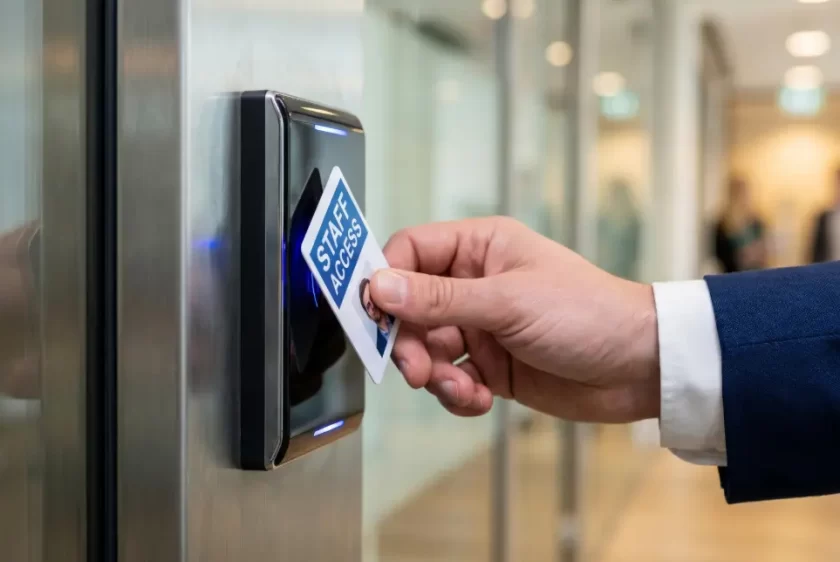
This is the challenge of tailgating: a secure entrance can still become a weak point when the number of people passing through is not controlled. This guide explains how entrance systems, access permissions, visitor management, and alarm response work together to reduce unauthorised entry. The right combination depends on whether you are managing a busy office lobby or protecting a sensitive server room.
Why Tailgating Prevention Matters in Enterprise Workplaces
Once inside, an unauthorised individual may gain access to employees, equipment, documents, or sensitive operational areas. Potential consequences include theft, exposure of confidential information, disruption, and risks to employee safety. Entry records can also become incomplete when people enter without presenting credentials.
Protection should therefore extend beyond the main reception area. A corporate lobby may prioritise smooth movement and supervised detection, while data centre access control or a laboratory entrance may require stricter individual passage controls around sensitive equipment and information.
For additional insights into physical security management, organisations can explore the resources available through ASIS International, a professional organisation focused on security management.
Why Card Readers and CCTV Alone Are Not Enough
A card reader checks whether a credential has permission to unlock an entrance. A conventional door does not necessarily check how many people pass through while it remains open. Similarly, CCTV recording can support investigation, but recording an incident does not automatically detect or prevent it.
Objective is to connect authorization with actual passage, identify exceptions, and give security teams a clear response procedure.
1. Choosing Entrance Systems for Tailgating Prevention
An effective tailgating prevention strategy combines access control technology, appropriate entrance barriers and employee awareness to reduce the risk of unauthorised entry.
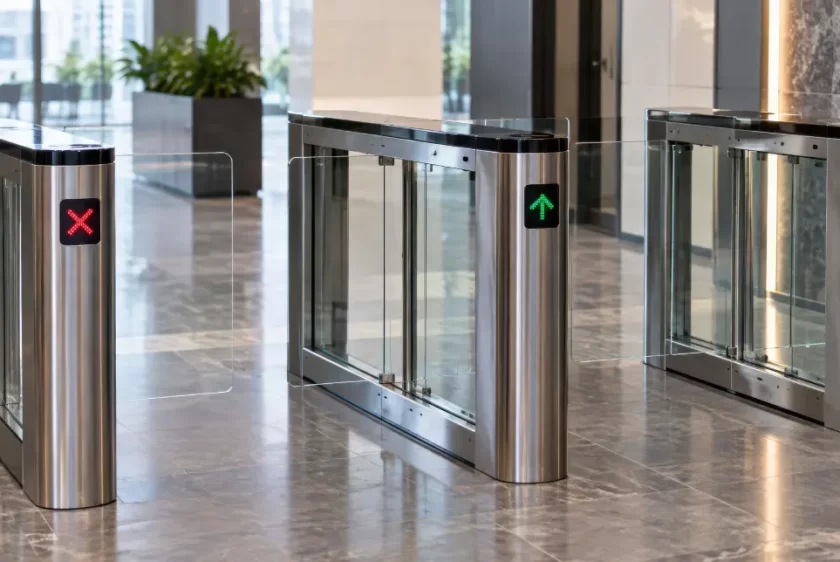
Turnstiles, speed gates, and security portals help regulate passage, but their ability to deter, detect, or prevent tailgating differs. Compare the application and operating limitations of each entrance technology before selecting a system.
Tripod Turnstiles: Suitable for supervised staff and industrial entrances. They regulate passage and deter unauthorized entry but may require additional detection and accessible entry routes.
Full-Height Turnstiles: Ideal for industrial perimeters and employee entrances. They provide a taller physical barrier, but accessibility, goods movement and emergency evacuation must be considered.
Sensor-Equipped Speed Gates: Suitable for corporate lobbies and busy offices. They support efficient movement and can detect tailgating, depending on the model and configuration.
Sensor-Equipped Security Portals: Designed for sensitive areas such as data centres and server rooms. Interlocked doors and occupancy checks help enforce individual passage, although throughput and emergency access require careful planning.
Capabilities vary by model and configuration. A sensor-equipped speed gate that alerts a guard should not be treated as equivalent to a portal designed to prevent multiple-person passage. Test the selected system against the site’s actual traffic and risk requirements. Accessible entry routes, emergency evacuation, and safe operation must form part of the entrance design.
2. Tailgating Prevention Through Enterprise Access Control
Every employee and approved visitor should use an individual credential.
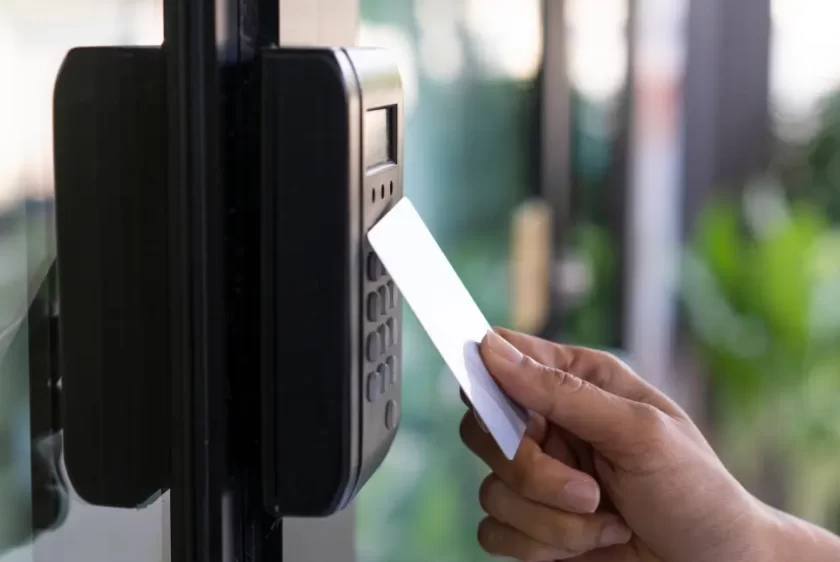
Enterprises should:
- Grant access according to job responsibilities and approved areas.
- Apply time restrictions where appropriate.
- Revoke access promptly when employees or contractors leave.
- Disable lost credentials and review temporary permissions.
- Use additional authentication for sensitive areas when justified by risk.
Biometric verification can help establish identity at the reader, but it does not by itself stop another person following through an open door.
Understanding Anti-Passback
Anti-passback checks whether a credential’s entry and exit sequence follows configured rules. For example, it can flag or reject a second entry when the credential has not recorded an exit. It can help discourage credential sharing, but it does not physically detect someone following another person through a doorway. It should complement passage controls rather than replace them.
3. Using Video Analytics for Tailgating Detection
Depending on the system, overhead sensors or video analytics can identify multiple people passing through an entrance within a defined interval. Where compatible integration is available, passage events can also be correlated with access permissions to identify a possible mismatch.
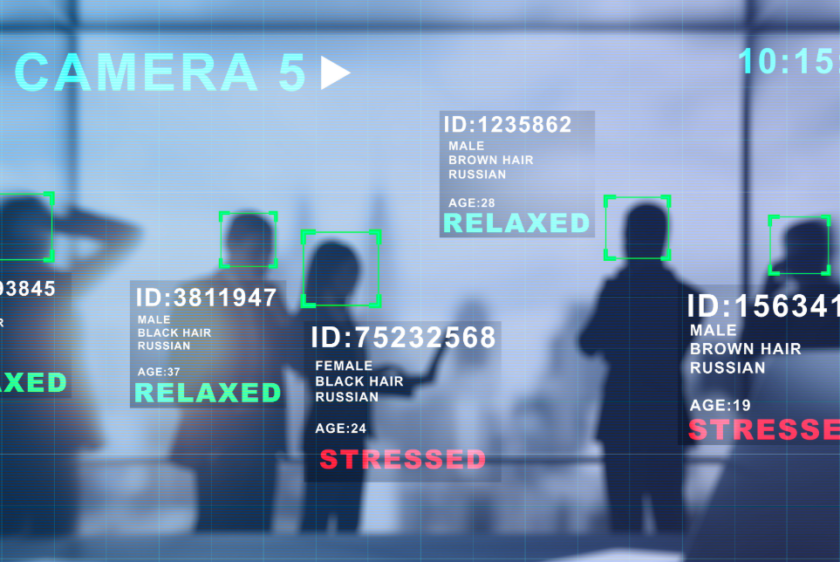
For example, one authorised entry followed by two detected passages could generate an alert for verification. A camera does not automatically know whether someone is authorised. That assessment requires appropriate access data, integration, and event logic.
Detection performance depends on installation, entrance layout, lighting, crowding, and configuration. Test the system under normal operating conditions and investigate recurring false alarms.
Integrated video and entry alerts help security teams verify suspicious passage.
4. Connecting Visitor Management Systems with Access Control
Visitor registration establishes who is expected; host approval confirms the business reason for the visit; access control determines where and when the visitor may enter. Connecting these steps reduces reliance on manual door opening and shared credentials.
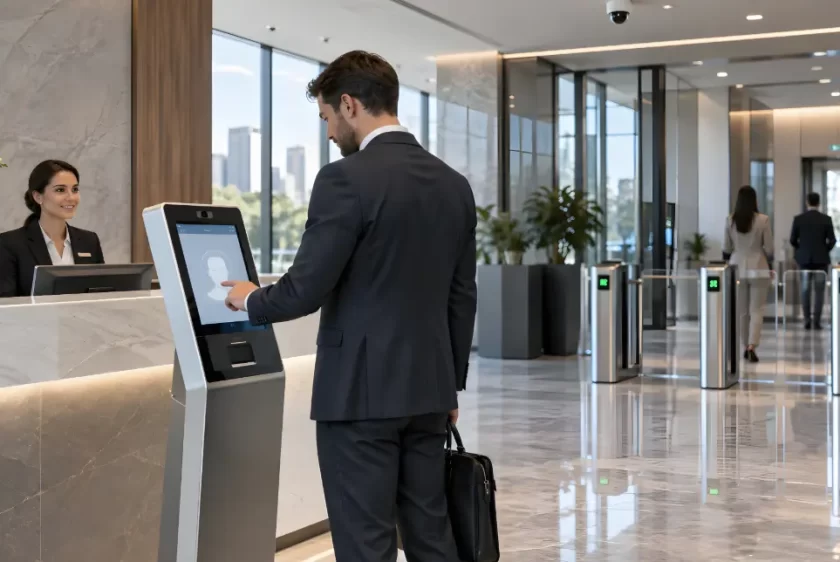
Where compatible visitor management systems and access control platforms are integrated, a practical workflow is:
- Register the visit. Capture the visitor’s name, company, purpose, host, and expected arrival time, with identity checks appropriate to the site.
- Obtain host approval. Confirm the visit and the areas, time window, and escort requirements permitted by site policy before access is activated.
- Issue an individual credential. Provision a supported card, QR code, or mobile credential and synchronise its approved doors and validity period with the access control platform.
- Verify passage at the entrance. The reader and controller check the credential’s permissions; the gate or door permits approved access and the transaction is logged.
- Apply escort and passage rules. Require an escort where needed, while ensuring every person follows the site’s entry verification process rather than following through on someone else’s authorisation.
- Close the visit. Revoke access at check-out or expiry, and retain visit and access records according to the organisation’s retention policy.
For example, a contractor approved to service an office meeting room should receive access only to the relevant route and visit window, not to the server room. Registration alone does not grant entry, and a printed visitor badge is not an access credential unless the system supports and validates it.
Delivery and service access also need clear procedures. A controlled main lobby offers limited protection if a side entrance is routinely left open. Confirm platform compatibility and test approval, permission updates, and revocation during commissioning.
5. Connecting Alerts to a Clear Response
An alert becomes useful when someone knows how to verify and act on it. Depending on system compatibility, a suspected tailgating event can:

- Identify the entrance and event time.
- Present the associated camera view.
- Notify the responsible security team.
- Prompt verification and an appropriate response.
- Preserve relevant records for incident review.
Door-held-open and forced-door events should also be monitored. Distinguish operational exceptions from incidents requiring escalation, and assign ownership for reviewing repeated alarms.
6. Maintaining Tailgating Prevention Systems and Support
Tailgating prevention depends on reliable equipment and ongoing operational review, not only installation. Schedule preventive maintenance for door closers, locks, gate sensors, readers, and camera coverage. Test alarms, approved emergency release, and operation during power or network interruptions.

Review alarm trends. Assign owners to recurring tailgating, forced-door, and door-held-open events; check associated video, response times, and false alarms, then adjust procedures or settings where needed.
Agree maintenance support. Define service intervals, fault escalation, response expectations, and spare-parts arrangements with the support provider, and retest affected functions after repairs or updates.
Look for locations where employees routinely bypass controls, particularly during busy arrival periods. Queues, unreliable readers, and unclear visitor procedures can undermine otherwise suitable technology. Security measures should support efficient everyday movement while maintaining safe evacuation and accessible passage.
Key Takeaways
Preventing tailgating requires more than installing a card reader. An effective approach combines:
- Individual access verification.
- Entrance controls matched to site risk.
- Sensors or analytics for suspicious passage.
- Structured visitor and contractor management.
- Employee awareness.
- Coordinated alarm verification and response.
- Regular maintenance and operational review.
The goal is to ensure that every entry is authorised, controlled, and supported by an appropriate security process.
Frequently Asked Questions
Can access cards alone prevent tailgating?
No. Cards verify credentials, but a conventional unlocked door may allow additional people to pass through. Suitable passage controls and procedures are also needed.
Do all turnstiles provide the same protection?
No. Some primarily regulate or deter entry, while others use sensors to detect tailgating. Higher-security entrances can provide stronger prevention capabilities. Selection should reflect the site’s risk and operating needs.
Can existing CCTV detect tailgating?
Possibly, if compatible cameras, analytics, positioning, and integrations support the required function. Existing recording cameras should not be assumed to provide tailgating detection.
Does anti-passback stop someone following through a door?
No. It controls credential-use sequences. Physical passage controls or detection systems are needed to address a second person entering without presenting a credential.
Reduce Unauthorised Entry Without Slowing Your Workplace
Are employees queuing at your entrance, visitors being admitted manually, or restricted areas relying on card readers alone? Your next step is to identify where entry controls need improvement and what level of protection each area requires.
Discuss your entrance layout, peak traffic, existing access control, and sensitive areas with Bion Analytx. We can help you evaluate suitable entrance systems and integration options around your security priorities, day-to-day operations, and budget.
Whether you are upgrading an office lobby or securing a data centre zone, ask about:
- Entrance options that balance protection, throughput, and accessible passage.
- Visitor approval and credential workflows that fit your existing systems.
- Alarm verification, staff training, and ongoing maintenance support.
Contact Bion Analytx to discuss your workplace entry requirements: marcomm@bion.co.in