
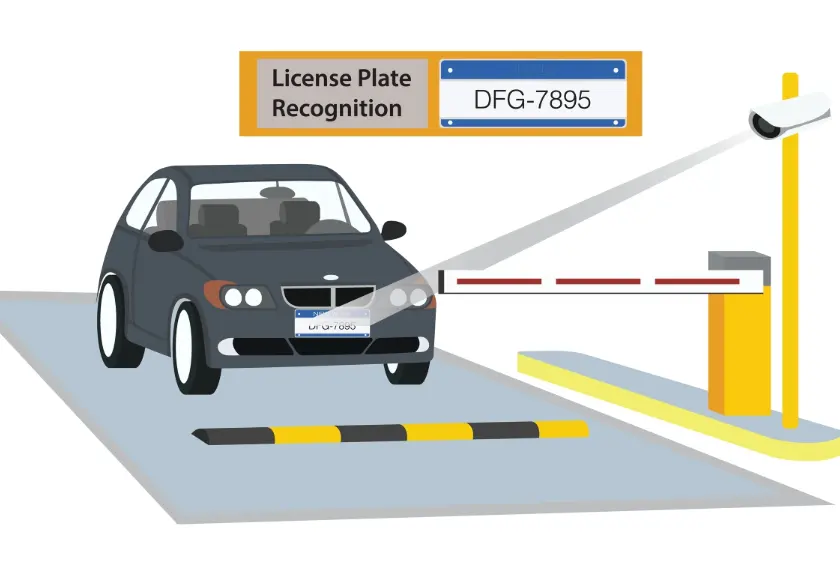
How does ANPR Technology improve Parking Management systems? The clearest answer is a single benchmark- gate entry time dropping from 30 seconds to under five.
That figure captures why facility operators across India are moving quickly from ticket-based parking to Automatic Number Plate Recognition (ANPR) systems. Technology is no longer confined to national highway toll plazas; it now sits at the core of gated corporate campuses, industrial warehouses, commercial malls, and multi-tenant IT parks where throughput, accuracy, and security all matter simultaneously.
This article covers the full picture: how ANPR systems work at entry and exit points, what the measurable gains look like in operational terms, which facility types benefit most, and what Indian operators must address on the integration and compliance front before go-live.
Bion Analytx integrates ANPR into a unified physical security ecosystem alongside access control and surveillance, an architecture worth understanding as you evaluate your own deployment options.
How ANPR Systems Work at Entry and Exit Points
ANPR (Automatic Number Plate Recognition) workflow is straightforward in principle. A camera captures the vehicle as it approaches the barrier, an optical character recognition (OCR) engine or an AI model reads the number plate, the result is matched against a whitelist or database, and the barrier either lifts or stays down. In a well-specified edge deployment, the entire sequence can complete in under five seconds.
What separates a functional deployment from a frustrating one is the gap between legacy OCR-based systems and modern AI-based ANPR cameras. In India, low-cost hardware keeps many installations at roughly 70% plate read accuracy. AI-driven systems, by contrast, consistently achieve 95 to 98% accuracy when correctly specified, trained on Indian datasets covering the full range of plate formats including HSRP and BH series, and deployed with infrared illumination and IP65/IP67-rated housings built to handle monsoon rain, dust, glare, and the non-standard plate fonts common across the country.
Plate-to-Barrier Workflow
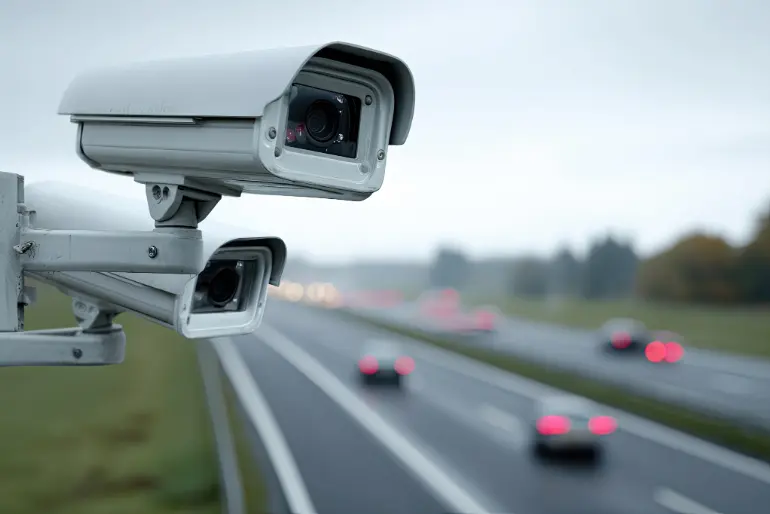
Edge-processing cameras handle recognition locally rather than routing raw video to a remote server, reducing end-to-end latency to tens or a few hundred milliseconds in most deployments. Once a plate is confirmed, the camera triggers the boom barrier controller directly via digital output (GPIO relay), Wiegand Interface or RS-485 signal. In enterprise deployments across India, 26-bit Wiegand is the most common output format because it maps the recognised plate to a Badge ID that existing access control panels already understand. Many cameras support direct Wiegand output without intermediary hardware, though some installations do use interface modules depending on the access control panel in use.
Why AI Models Outperform Legacy OCR in Indian Conditions
Consider a monsoon evening at a busy IT park gate: two-wheelers queuing closely behind four-wheelers, mud-streaked rear plates, and oncoming headlights washing out the frame. Rule-based OCR fails here not because of a fringe scenario, but because this is routine Indian operating reality. AI models trained on local field data treat dirty plates, partial occlusion, night-time glare, and angled plate mounting as normal variables rather than exceptions.
How ANPR Technology Improves Parking Management Systems: Measurable Gains in Gate Throughput
Numbers here are concrete. ANPR-powered ticketless parking systems reduce entry and exit wait times by up to 40%, driven by the elimination of ticket dispensing, manual validation, and the physical hand-off at the gate. Processing time drops from 30 seconds to under five seconds per vehicle, and overall traffic flow improves by approximately 30%. For a facility handling several hundred vehicle movements daily, those figures translate directly into fewer attendants needed at boom barriers, lower incident frequency at entry lanes, and meaningfully higher throughput during the morning and evening peak windows that typically create the worst congestion. For advanced deployments that integrate lane throughput monitoring with license plate recognition, explore Smart ANPR & Speed Monitoring Solutions.
Gate Processing Times and Queue Reduction
Fewer manual interventions at the gate means fewer opportunities for human error, argument over lost tickets, or payment disputes that back up the queue. ANPR removes all three from the equation at the entry point. A facility that previously required two or three attendants per shift managing barriers and ticket machines can reallocate that resource to higher-value security tasks.
Occupancy Accuracy and Revenue Recovery
When a car exits without properly closing out its session, a missed ticket scan, a tailgate exit, a manual override, it remains logged as present, distorting real-time occupancy data. Because every vehicle movement is recorded against a plate rather than a physical ticket that can be lost, shared, or bypassed, ANPR-based entry and exit logging closes that discrepancy at source. Combined with ticketless billing, ANPR parking occupancy detection also eliminates revenue leakage from fare evasion and manual mis-logging. Many operators implement these capabilities as part of a broader Smart Parking Management Systems rollout.
How ANPR Improves Parking Management at IT Parks and Corporate Campuses
High daily vehicle counts, multi-tenant access rules, and the need to differentiate employees from contractors from visitors are the defining challenges here. ANPR automates permit validation against pre-configured access groups, so security staff are not manually checking stickers or RFID cards during rush hours. Every entry and exit generates a time-stamped audit trail, one that security teams rely on during incident investigations rather than depending on attendant memory or incomplete logs.
Warehouses and Industrial Facilities
Asset movement and vendor vehicle authorisation are the pressure points in industrial environments. Shift-change windows create concentrated bursts of traffic that manual systems handle poorly. ANPR logs every entry and exit with a timestamp, supporting both security investigations when goods go missing and logistics compliance when vendors need to demonstrate delivery times. For high-security industrial sites where vehicle spoofing is a concern, a hybrid approach combining ANPR for general access with RFID for authorised heavy vehicles provides an additional layer of verification.
Connecting ANPR to Access Control and Security Command Centers
ANPR on its own is useful. ANPR connected to access control systems, real-time dashboards, and alert workflows becomes a security platform. integration stack for a well-specified enterprise deployment.

The Integration Stack: What ANPR Needs to Connect To
The key integration types for an enterprise facility are:
- PMS, for permit validation and billing
- Payment gateways, for pay-by-plate transactions
- Boom barriers, for physical access control
- IoT occupancy sensors, for space-level data
- VMS, for video correlation during incidents
Open API architectures from established ANPR vendors support all of these without proprietary lock-in, which matters when facilities evolve and new systems need to be added years after initial deployment.
Why Unified Platforms Reduce Operational Complexity
Fragmented integrations across multiple vendors create alert-handling lag and operational overhead. When an ANPR event sits in one system, video evidence in another, and access control logs in a third, operators spend time correlating data rather than responding to incidents. Enterprise Security Solutions Portfolio addresses exactly this problem: ANPR data feeds directly into an integrated access control and surveillance dashboard so security operators see vehicle and personnel movements in a single operational view, with no manual data reconciliation required. That kind of unified command architecture is what separates a responsive security operation from one that is permanently catching up.
Data Privacy and Compliance: What Indian Operators Must Get Right
Number plate data qualifies as personal data under the Digital Personal Data Protection Act (DPDP Act) 2023 once it can be linked to an individual through vehicle registration records. The core operational provisions of the Act come fully into force in 2027, but operators deploying ANPR now are building data infrastructure that will need to be compliant by that date. Designing for compliance at the outset is far less costly than retrofitting later. For an accessible policy overview, read Understanding India’s new data protection law.
What the DPDP Act Requires from ANPR Operators
Key obligations include:
- Obtaining clear, informed consent before processing number plate data (with exemptions for law enforcement and public order purposes)
- Retaining processing logs for a minimum of one year for security and legal compliance functions
- Deleting data once the purpose for which it was collected has been served
The Act explicitly states that constant surveillance cannot be the default condition of access to a facility, which means ANPR configurations should not retain continuous location histories without a documented, time-limited purpose.
Choosing the Right Deployment Path
How does ANPR technology improve parking management systems? By removing the manual bottlenecks that degrade throughput, distort occupancy data, and create revenue leakage.
The strongest outcomes consistently come when ANPR is deployed not as a standalone gate device but as part of a unified security and access management platform. Vehicle movements, personnel access events, and surveillance footage belong in the same operational view, not siloed across separate vendor dashboards.
If your current entry management setup is still running on ticket dispensers, manual validation, or standalone RFID without centralised analytics, the benchmarks in this article give you a clear basis for evaluating what an integrated ANPR deployment would change. The entry point is the logical starting node; what you connect it to determines the system’s operational ceiling.
Frequently Asked Questions
Q: How does ANPR technology improve parking management systems?
A: ANPR technology improves parking management systems by automating vehicle identification at entry and exit points, eliminating the need for physical tickets, reducing gate processing time from around 30 seconds to under five seconds, and enabling real-time occupancy tracking.
Q: Which types of facilities benefit most from ANPR-based parking management?
A: ANPR is widely adopted beyond toll plazas and now sits at the core of gated corporate campuses, industrial warehouses, commercial malls, and multi-tenant IT parks where throughput, accuracy, and security matter simultaneously
Q: What accuracy can Indian facilities expect from modern ANPR systems?
A: AI-based ANPR systems trained on Indian plate formats consistently achieve 95 to 98% read accuracy under real operating conditions, including low light, rain, and partially obscured plates.
Q: How does the plate-to-barrier workflow work in an ANPR deployment?
A: A camera captures the vehicle, an OCR engine or AI model reads the number plate, the result is matched against a whitelist or database, and the barrier is commanded to lift or stay down.
Q: Is number plate data subject to privacy regulations in India?
A: Yes. Under the Digital Personal Data Protection Act (DPDP Act) 2023, number plate data qualifies as personal data once it can be linked to an individual through vehicle registration records. Operators must obtain informed consent, apply defined retention limits, and delete data once its stated purpose is fulfilled. Full operational provisions come into force in 2027, but building compliant infrastructure from the outset is strongly advisable.
Talk to our security experts: marcomm@bion.co.in