

For years, physical security was designed around infrastructure—not people.
Badges, cameras, doors, and alarms were deployed to protect buildings, often without a clear understanding of how those buildings were used. The result? Systems that technically worked but operationally struggled.
Designing security for real workplaces has taught us something critical:
Security succeeds only when it aligns with how people work, not how systems are sold.
In 2026, enterprise security design is no longer about installing technology. It’s about enabling safe, efficient, and resilient operations across dynamic environments.
The Reality of Modern Workplaces
Real workplaces are complex.
They are:
- Multi-site and multi-tenant
- Hybrid and flexible
- Continuously evolving due to growth, mergers, and policy changes
Security designs that assume static layouts and predictable behaviour fail quickly in these environments.
What works in theory often breaks down in practice when:
- Employees move between locations
- Contractors require temporary access
- Operations run beyond business hours
- Compliance expectations shift without warning
Designing for reality means accepting that change is the norm, not the exception.
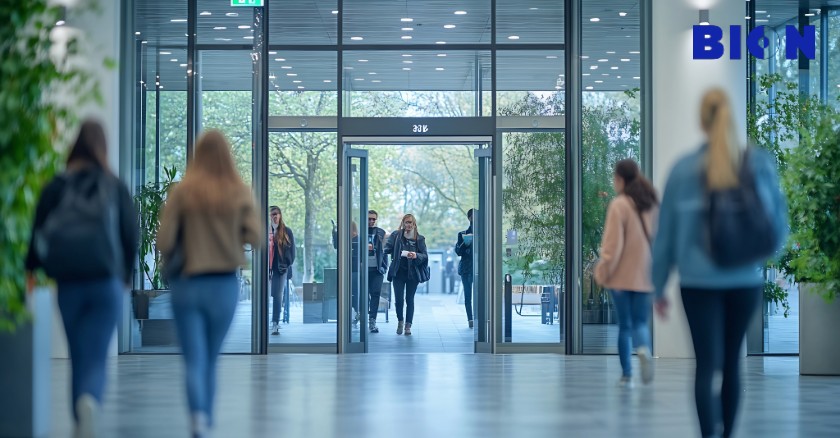
Lesson One: Security Must Fit the Workflow
The most common failure we see isn’t technology—it’s friction.
When security systems interrupt workflows, people bypass them. Tailgating, badge sharing, propped doors, and delayed incident reporting are not human failures—they’re design failures.
Effective security design:
- Aligns access policies with job roles
- Reduces unnecessary authentication steps
- Supports movement, not obstruction
- Integrates naturally into daily operations
When security supports productivity, compliance improves automatically.
Lesson Two: Visibility Matters More Than Control
Traditional security emphasized control—locking doors, restricting access, enforcing rules.
Modern enterprises need visibility first.
Designing security for real workplaces means enabling:
- Centralized visibility across all sites
- Contextual awareness of who is where and why
- Real-time understanding of incidents as they unfold
Control without visibility creates blind spots. Visibility enables informed decisions—whether that’s responding to an incident, adjusting access policies, or validating compliance.
Lesson Three: Integration Is Not Optional
Standalone systems cannot reflect workplace reality.
Real workplaces require security systems that talk to:
- Identity and HR platforms
- IT and cybersecurity systems
- Facilities and operations tools
Integrated security environments allow organizations to:
- Correlate access events with identity changes
- Detect abnormal behaviour faster
- Reduce manual reconciliation across teams
Integration is what transforms security from a collection of tools into an operational capability.
Lesson Four: People Change Faster Than Buildings
Buildings may stay the same, but people don’t.
Roles evolve. Teams reorganize. Contractors rotate. Temporary workers become permanent. Without adaptive security design, access policies quickly become outdated—and risky.
Security systems designed for real workplaces:
- Automate onboarding and offboarding
- Adapt access based on role changes
- Support temporary and time-bound permissions
- Reduce reliance on manual updates
This adaptability is essential for reducing insider risk and operational overhead.
Lesson Five: Security Is an Ongoing Service, not a Project
One of the biggest misconceptions in physical security is that deployment equals completion.
In reality, security design is a living process.
Sustainable security outcomes depend on:
- Continuous system tuning
- Regular policy reviews
- Proactive maintenance and AMC services
- Ongoing alignment with business changes
Organizations that treat security as a one-time project fall behind. Those that treat it as a managed service stay resilient.
What Real-World Security Design Delivers
| Design Focus | Workplace Outcome |
| Workflow-aligned access | Faster, more informed response |
| Unified visibility | Reduced operational complexity |
| Data intelligence | Proactive risk management |
| Automation | Lower manual effort |
| Scalable architecture | Long-term cost efficiency |
When security is designed for reality, it becomes an enabler—not a barrier.
Looking Ahead: Designing for the Workplace That Doesn’t Exist Yet
The most important lesson we’ve learned.
You’re not designing security for today’s workplace—you’re designing it for the one still emerging.
That means building:
- Platforms, not point solutions
- Policies that adapt, not restrict
- Systems that scale without rework
Organizations that embrace this mindset don’t just secure their workplaces—they future-proof them.

Build Security That Works Where People Actually Work
At Bion Analytx, we design and integrate physical security solutions grounded in real operational environments—balancing safety, usability, and scalability.
If you’re rethinking how security should support your workplace—not fight it—we’re ready to help.
Talk to our security experts
marcomm@bion.co.in
Frequently Asked Questions
What does designing security for real workplaces mean?
It means aligning security systems with actual employee behaviour, workflows, and operational needs rather than idealized assumptions.
Why do traditional security designs fail in modern workplaces?
They are built for static environments and siloed systems, which cannot adapt to hybrid work, role changes, and enterprise scale.
How does integration improve workplace security?
Integration enables shared visibility across systems, faster incident response, and alignment between physical, IT, and identity security.
What role do people play in security design?
People are central. Effective security anticipates how users move, work, and adapt—and designs systems around those patterns.
Is security deployment a one-time activity?
No. Security requires continuous optimization, maintenance, and alignment with evolving business operations.
How can organizations future-proof workplace security?
By investing in scalable platforms, adaptive policies, and long-term integration and support strategies.